

This is a 6-part series that explores how stalled systems and quiet power shifts are creating a Second Act Economy, where waiting feels responsible until it becomes dangerous.
If you only know Venezuela from clips and headlines, here is the straight version.
Venezuela didn’t suddenly collapse.
It didn’t explode overnight.
It didn’t fall because of one protest, one election, or one moment.
It stalled.
And that is far more dangerous.
What Happened, in Simple Terms
Venezuela is one of the most resource-rich countries in the world.
Massive oil reserves.
A population that expected stability.
Over time, power concentrated at the top under Nicolás Maduro.
Maduro came to power after Hugo Chávez died. He was not an outsider or a reformer. He was Chávez’s chosen successor. A former bus driver and union organizer who rose through the ruling party, Maduro inherited a system already built on state control, oil dependence, and political loyalty. Once in power, he tightened control, weakened opposition, and stayed in office through disputed elections while the country’s institutions kept operating but stopped protecting people.
At the same time:
- The government printed money to cover spending
- Inflation spiraled out of control
- The local currency lost real value
- International sanctions cut the country off from normal financial systems
- Companies pulled out
- Institutions kept existing but stopped functioning well
The key detail most people miss:The government never fully fell.
The system never fully broke.
It just stopped working for regular people.
What That Looked Like on the Ground
Here is what stalling actually means in real life:
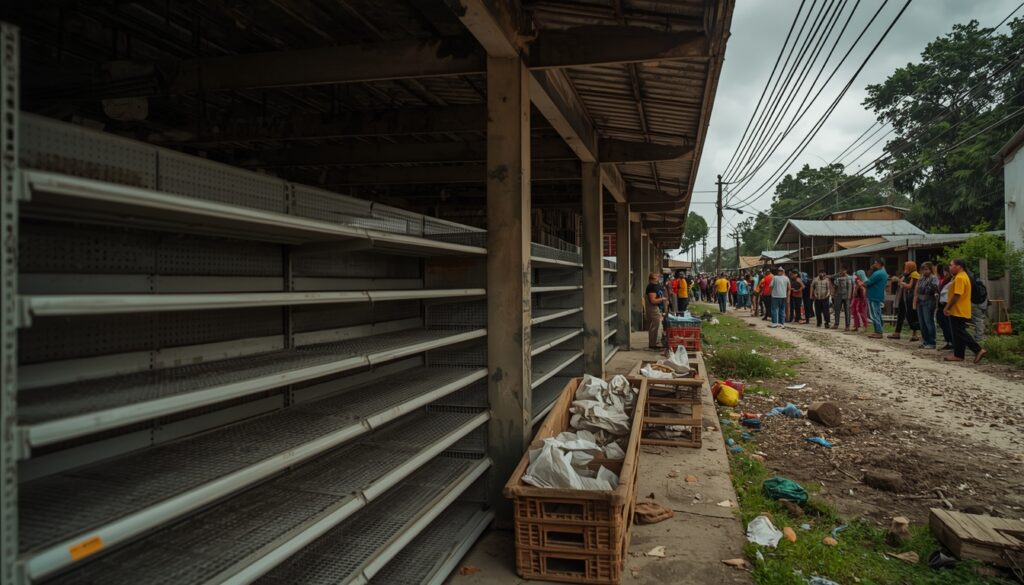
- Your paycheck exists but doesn’t buy food
- Your job still exists but wages are meaningless
- Banks still operate but money loses value daily
- Schools and hospitals are open but underfunded
- Leadership stays in place but nothing improves
So people adapt.
Millions of Venezuelans didn’t wait for reform.
They left the country.
They sent money back home.
They worked online.
They traded informally.
They survived outside the official economy.
Not because they wanted to.
Because the official system stopped being usable.
The Most Important Part: There Was No Fix
This is the part that matters for the Second Act Economy.
People kept expecting:
- new leadership
- policy change
- economic recovery
- outside intervention
None of it fully came.
Years passed.
The system stayed half alive.
That forces a decision:
Do you keep waiting for stability to return?
Or do you build a parallel life that doesn’t depend on it?
Venezuela became a country where second acts weren’t optional.
They were mandatory.
Why This Is Not Just a Foreign Problem
This is where people get uncomfortable.
Because Venezuela isn’t scary due to chaos.
It’s scary because of how normal it looks at first.
A system can:
- Keep paying people
- Keep institutions open
- Keep leadership intact
And still quietly fail to protect its population.
That same pattern now shows up elsewhere as:
- Jobs that exist but don’t lead anywhere
- Careers that stall permanently
- Companies that profit while workers fall behind
- Benefits that quietly disappear
- Temporary economic strain that never ends
You have probably already seen this version of stalling up close.
The job still exists. Your title hasn’t changed. Your paycheck still hits. But the future quietly disappeared. Promotions stopped without being canceled. Raises became symbolic. Leadership keeps saying next year. The role hasn’t ended, but it also isn’t going anywhere. Nothing is technically wrong, yet everything that once made it feel like progress is gone. You are not failing. The system simply moved into maintenance mode, and you are expected to wait inside it as if momentum will return on its own.
The danger isn’t collapse.
It’s endless limbo.
The Second Act Economy Is Born in Limbo
The Second Act Economy doesn’t start when everything breaks.
It starts when people realize:
- Waiting is costing them years
- Loyalty is no longer rewarded
- Stability is no longer coming back
That is when people stop asking, “When will this be fixed?”
And start asking, “How do I survive without it?”
That question is already spreading quietly.
Why This Series Exists
This series isn’t about doom.
It’s about pattern recognition.
Venezuela shows us what happens when:
- Systems don’t collapse
- Leaders don’t leave
- Recovery never arrives
People stop planning inside the system.
They build beside it.
That shift is the Second Act Economy.
And once you recognize the pattern, you stop mistaking patience for safety.
Next post:
If a Country Can Stall for a Decade, So Can a Career
Because unresolved systems don’t announce themselves.
They just quietly force people to adapt.