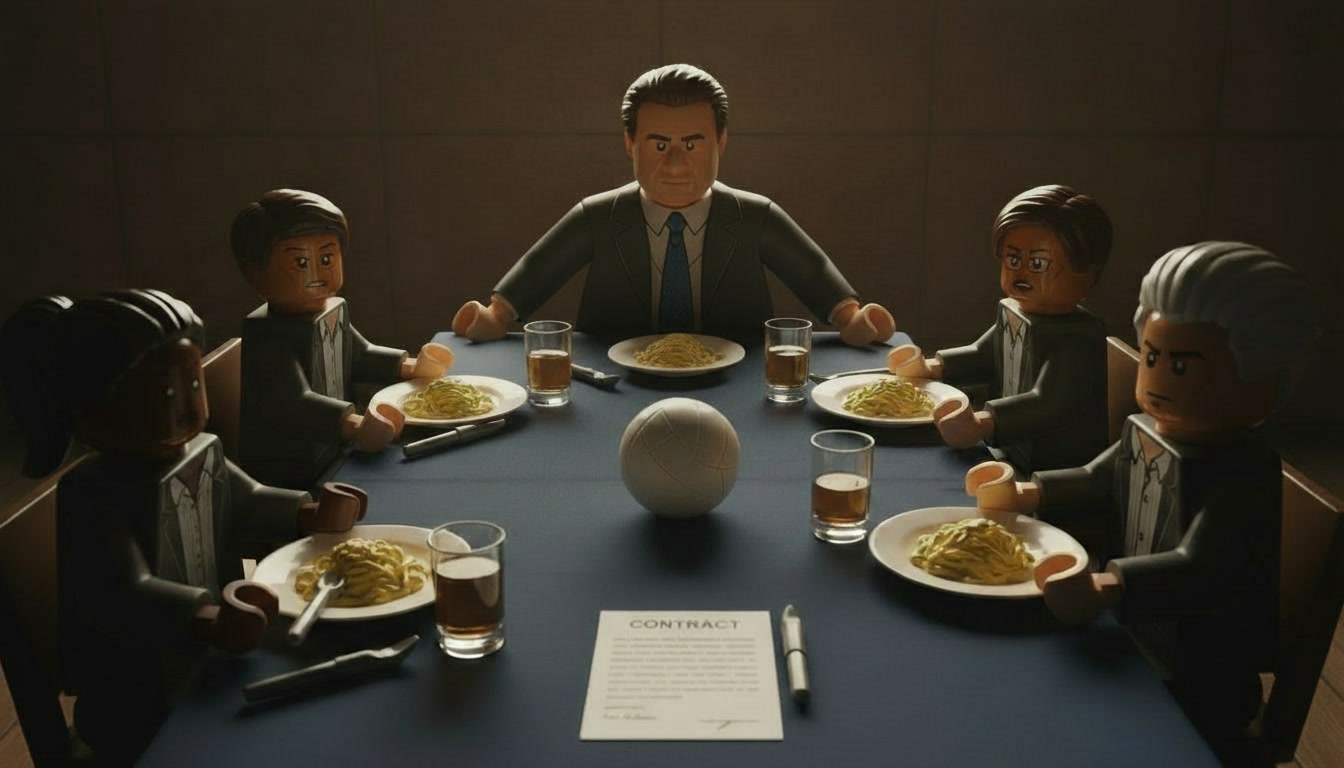



Everyone wants their kid to win.
But not everyone is prepared for what youth sports can ask from a family.
Some parents get tired.
Tired of the politics.
Tired of the pressure.
Tired of wondering if effort is enough.
So they step back.
They settle.
They bounce from team to team, coach to coach, chasing something that never quite clicks.
Sometimes they walk away completely.
Even when their kid has talent.
Even when their kid still wants to play.
If you have spent enough time around competitive youth sports, you know this feeling.
You show up to support your child.
To cheer. To encourage. To watch them grow.
You believe in hard work. You believe the game teaches life.
And then, slowly, you start noticing things.
Lineups that do not match performance.
Tryouts that feel decided before they begin.
Coaches leaning toward families they already know.
Parent circles that quietly shape team dynamics.
Nobody explains it.
But parents see it.
Kids feel it.
You can feel it in the quiet car rides home.
And most of us wrestle with the same quiet questions.
If I speak up, does my kid pay for it?
If I push back, do I get labeled difficult?
If I stay quiet, am I part of the problem?
If I keep going, am I asking my child to carry something unfair?
So people manage it the best they can.
Stay agreeable.
Do not rock the boat.
Hope talent speaks loud enough.
Sometimes it does.
Sometimes it does not.
I have two kids competing in this world.
I want them to earn everything they get.
I believe the best players should play.
I do not care whose kid they are.
If they earned it, they earned it.
But everyone deserves a real chance to earn it.
That is where things get complicated.
Because youth sports are not just about talent.
They are also about relationships and familiarity.
Social comfort and unspoken circles.
Who fits naturally.
Who feels like they are on the outside looking in.
There is pressure on parents too.
Fit in or get frozen out.
Speak up and risk being labeled a problem.
Stay quiet and carry it alone.
Meanwhile, everything keeps moving as if nothing is wrong.
Money creates advantages. More training. More travel. More visibility.
At the same time, elite programs will stretch for a truly special player who has nothing.
Winning still drives decisions.
That part is complicated, but understandable.
What is harder to ignore is when opportunity feels tied more to proximity and politics than performance.
And that makes fairness harder to measure, even when the tools exist.
We have game film.
We have stats.
Platforms track every touch. Every rep.
Data exists that should make decisions clearer.
And now AI is entering youth sports. Tools that can evaluate performance without emotion or bias.
So a fair question sits in front of all of us.
Are these tools being used to create fairness?
Or are they just there to make things look fair?
I am not against competition.
I am not against strong programs.
I am not against winning.
I am against pretending everything is equal when it is not.
And I am against parents feeling crazy for noticing it.
This is not a rant.
And it is not an expose.
It is an honest conversation.
The kind parents already have in parking lots, on long drives home, and in late night texts.
In this series, we are going to talk about what is really happening.
Why parents feel stuck.
How kids experience the pressure.
What actually helps.
What quietly hurts.
How to stay involved without losing yourself.
When to push.
When to step back.
When to leave.
And what our kids are learning while we navigate all of it.
Because doing nothing is still a decision.
And our kids are learning what integrity looks like by watching how we handle this one.