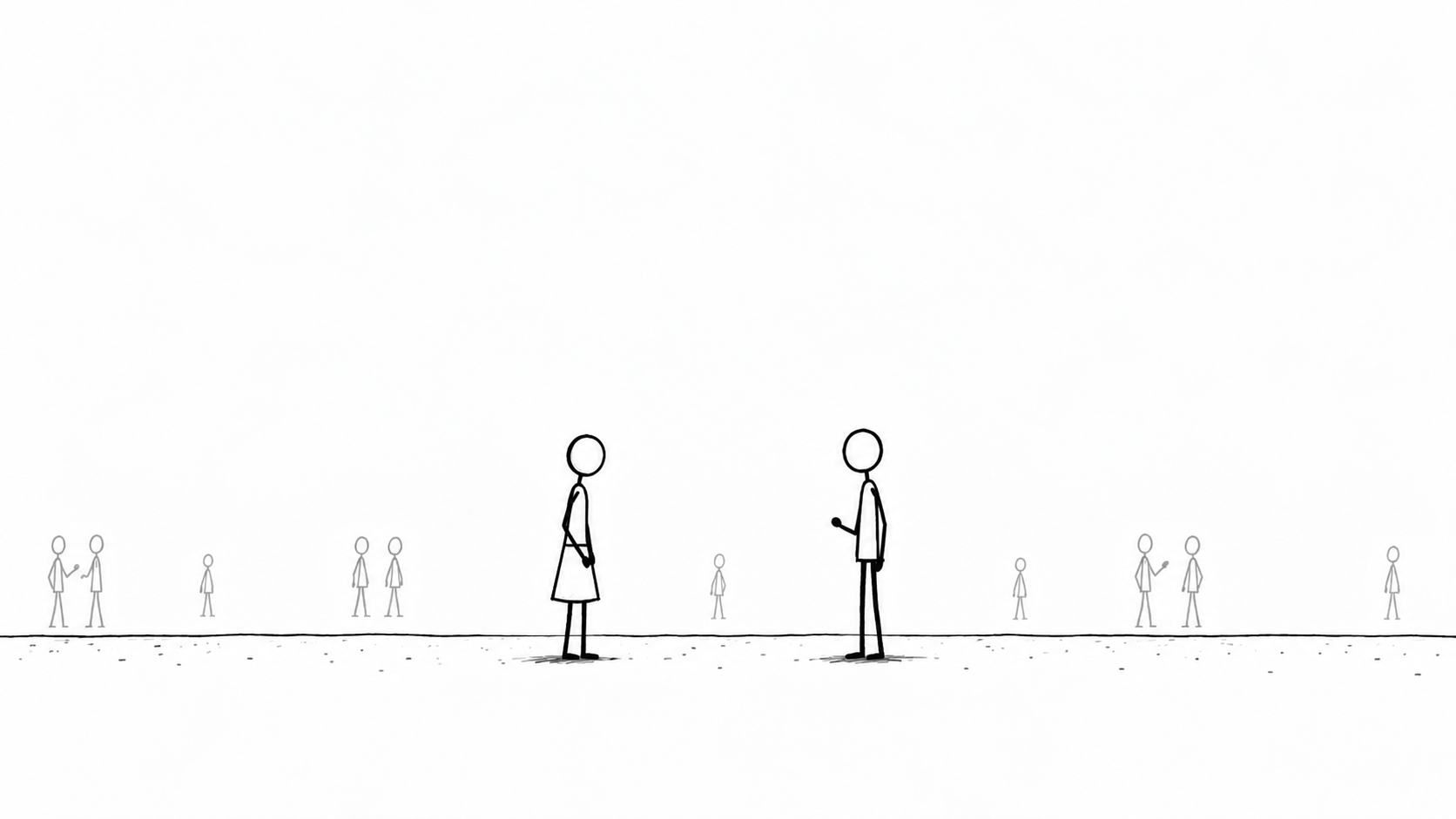



Trust does not disappear all at once.
It fades.
Slowly.
Quietly.
Without announcement.
Until one day, it’s no longer there.
The Moment It Changes
There is no headline for it.
No official confirmation.
Just a shift.
People stop assuming things are fair.
They stop believing outcomes are earned.
They stop expecting truth to be complete.
Nothing looks different on the surface.
But everything feels different underneath.
When Belief Becomes Performance
Without trust, behavior changes.
People still follow the system.
They still participate.
They still engage.
But the belief is gone.
What remains is performance.
People do what is expected.
They say what is acceptable.
They move within the structure.
But internally, they have already disconnected.
We have seen moments where public confidence in institutions declined sharply, yet participation never stopped. People still showed up, still complied, still engaged, but not because they believed, more because they knew the system still controlled outcomes.
The Rise of Quiet Detachment
This is not rebellion.
It is distance.
People stop investing emotionally.
They stop defending the system.
They stop expecting it to improve.
They observe.
They adapt.
They move accordingly.
When Outcomes Lose Meaning
In a system without trust, outcomes still happen.
Decisions are made.
Results are announced.
Narratives are presented.
But the meaning changes.
Success feels less earned.
Failure feels less surprising.
Recognition feels less real.
Everything continues.
But nothing carries the same weight.
The Shift to Self-Preservation
When trust disappears, priorities change.
People stop thinking in terms of collective outcomes.
They focus on themselves.
Their position.
Their security.
Their advantage.
Not out of greed.
Out of adaptation.
We have seen periods where economic or institutional uncertainty led people to quietly prioritize personal positioning over shared outcomes, not because they wanted to undermine the system, but because they no longer trusted it to protect them.
The System Still Functions
This is the part most people misunderstand.
The system does not collapse when trust is gone.
It continues.
Processes still run.
Decisions still get made.
Structures still stand.
From the outside, everything looks stable.
But stability is no longer supported by belief.
It is supported by habit.
The Hidden Cost
A system without trust becomes harder to repair.
Because participation continues, but belief does not.
Feedback becomes surface-level.
Engagement becomes conditional.
Support becomes temporary.
Nothing breaks immediately.
But nothing strengthens either.
What This Reveals About People
People do not need perfect systems.
They need believable ones.
Once something stops feeling real, they adjust.
Not loudly.
Quietly.
Closing
Trust does not collapse systems.
Its absence reshapes them.
Into something that still works.
But no longer means what it once did.
And once that shift happens, restoring trust becomes harder than losing it.
Because people don’t return to belief easily.
They remember what it felt like when it was gone.