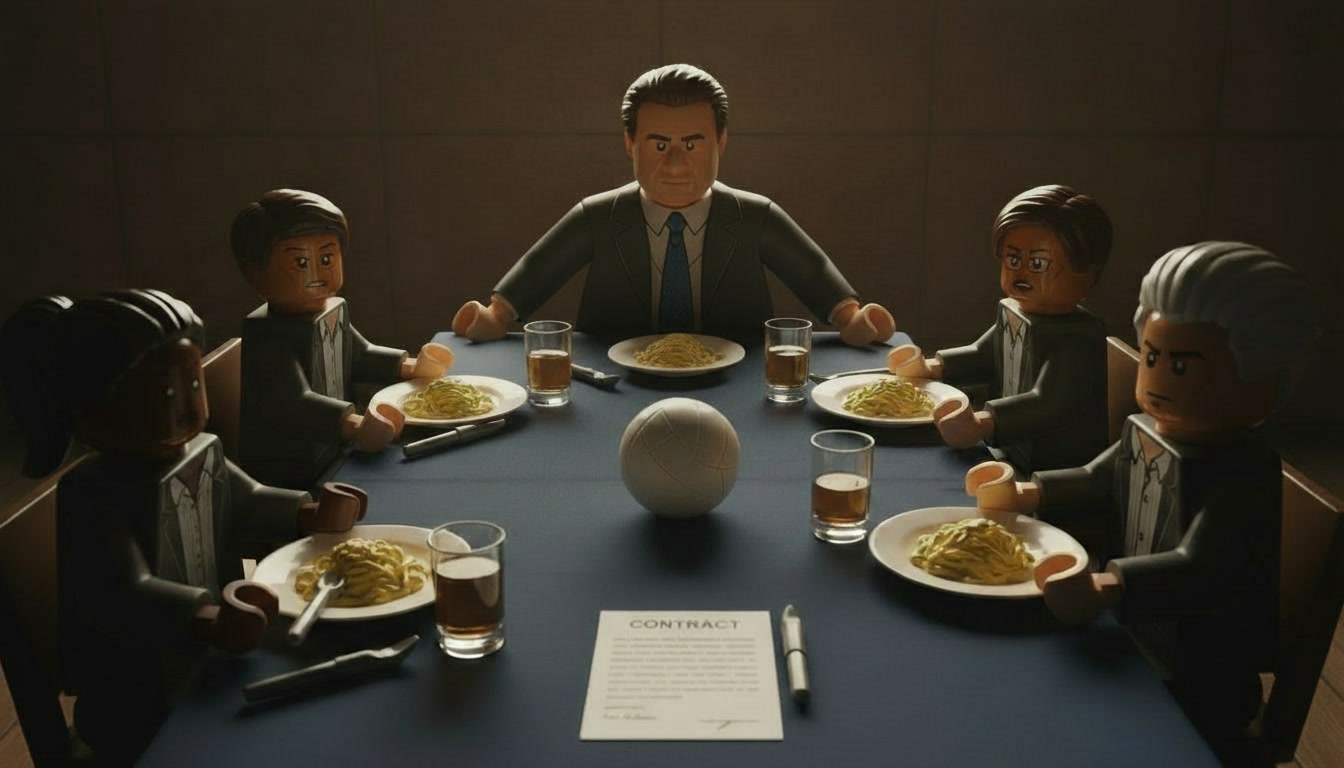



There was a time when sports gambling lived in the shadows.
It existed quietly.
Unofficially.
Around the edges of culture.
Now it is everywhere.
Pregame shows discuss odds before matchups.
Broadcasts flash betting lines between plays.
Leagues partner directly with sportsbooks.
Commentators speak the language of gambling as casually as statistics.
The shift happened fast.
Too fast to feel accidental.
From Taboo to Integration
The cultural reversal was dramatic.
What was once treated as a threat to the integrity of sports became part of the presentation itself.
Not adjacent to the game.
Inside it.
Betting moved from hidden behavior
to mainstream participation
to embedded experience.
The line between watching and wagering blurred almost completely.
We reached a point where betting odds began appearing on mainstream sports broadcasts before lineups, injuries, or strategy were even discussed.
Former athletes and analysts who once avoided the topic now read betting promotions directly during coverage.
That would have felt unthinkable not long ago.
The New Layer of Attention
Sports once competed for viewers.
Now they compete for engagement loops.
A game is no longer just a game.
It becomes a series of live decisions, micro risks, emotional spikes, and constant interaction.
Every possession can become a wager.
Every moment can become monetized.
Attention no longer ends at viewership.
It continues through behavior.
The Normalization Phase
The most powerful changes rarely arrive through force.
They arrive through repetition.
Commercials.
Celebrity endorsements.
Bonus bets.
Friendly language.
The tone stays light.
Convenient.
Entertaining.
Eventually, the thing stops feeling new.
Then it stops feeling significant.
Then it simply becomes normal.
College athletics became one of the clearest examples.
Young athletes, massive audiences, national exposure, and gambling markets surrounding games played by people barely old enough to legally place bets themselves.
The environment changed faster than the culture fully processed.
When the System Learns the Audience
Modern systems understand psychology extremely well.
They understand dopamine.
Habit loops.
Variable reward.
Emotional volatility.
Sports betting sits at the intersection of all of them.
The game never fully ends because the engagement never fully stops.
Even losing becomes part of the loop.
And for some people, the line between entertainment and addiction disappears quietly.
Not through dramatic collapse, but through repetition, isolation, and the illusion that the next moment fixes the last one.
The Illusion of Participation
Betting creates a feeling deeper than spectatorship.
People no longer just watch outcomes.
They attach themselves to them.
Emotionally.
Financially.
Psychologically.
The audience begins feeling like participants in the system itself.
That feeling increases attachment, even when the outcome is negative.
The Question Beneath the Surface
This is where the conversation becomes uncomfortable.
Not whether sports betting should exist.
But why the integration became so aggressive, so quickly, across nearly every major platform at the same time.
Leagues adapted.
Media adapted.
Advertising adapted.
Culture adapted.
The resistance barely lasted.
And when professional athletes or insiders are eventually caught violating betting rules, the reaction feels strangely familiar.
Public shock.
Temporary outrage.
Then the machine continues moving exactly as before.
When Revenue Changes the Environment
Once large systems become financially tied to behavior, the environment changes around that behavior.
Coverage shifts.
Language shifts.
Presentation shifts.
Not through conspiracy.
Through incentives.
The ecosystem reorganizes around what produces engagement and revenue.
The Emotional Cost
For many people, the shift feels subtle at first.
Then constant.
Games feel different.
Conversations feel different.
Attention feels fragmented.
Entertainment becomes transactional.
The experience changes even for people who never place a bet.
What This Reveals About Power
Power does not always force behavior.
Sometimes it redesigns environments until the behavior feels natural.
The most effective systems do not demand participation.
They normalize it.
Quietly.
Repeatedly.
At scale.
Closing
The Sports Betting Era is not just about gambling.
It is about integration.
A system once kept outside the structure became part of the structure itself.
And once something becomes embedded deeply enough into culture, people stop asking when it arrived.
They start assuming it was always there.