

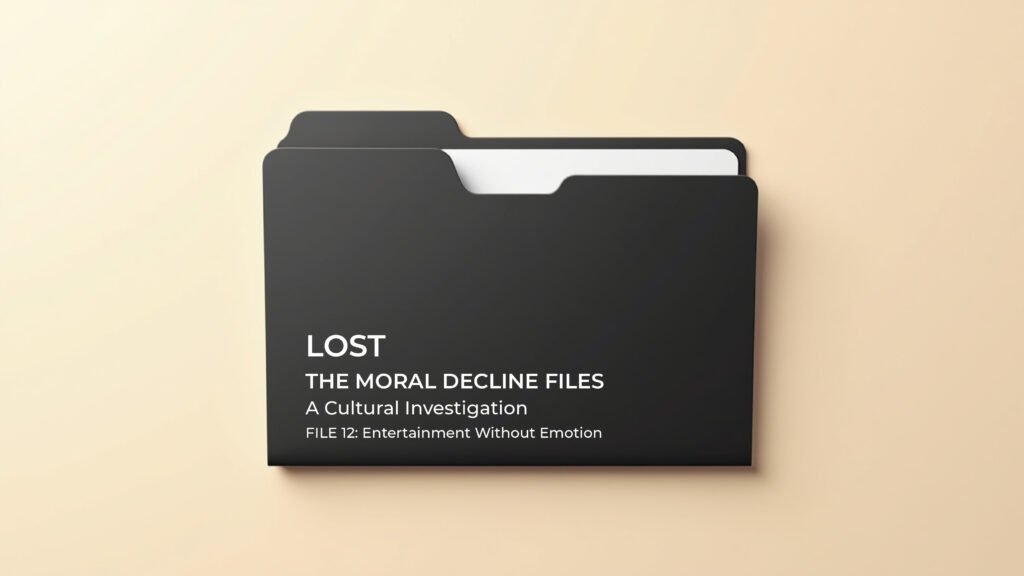
A 13-Part Cultural Investigation
Case Overview
Violence used to horrify us.
Now it holds our attention.
There was a time when suffering stopped the room.
When pain demanded pause.
When tragedy required silence.
Violence was not consumed.
It was mourned.
Somewhere along the way, that reaction shifted.
Not because violence increased.
But because distance did.
We stopped feeling pain together.
We started watching it.
Back Then: When Pain Still Slowed Us Down
You remember when bad news felt heavy.
When stories unfolded slowly.
When names were remembered.
Violence interrupted life.
It did not blend into it.
People gathered.
Prayed.
Reflected.
You were not expected to react immediately.
You were expected to feel.
There was space between the event and the response.
Space for grief.
Space for empathy.
Pain was not content.
It was human.
You remember when a violent story meant someone you knew was affected.
A school you drove past.
A street you walked.
A family that stopped showing up.
Violence was close enough to hurt, but far enough to mourn.
When the Blur Began
Then the footage arrived.
Cameras everywhere.
Phones always on.
Live streams replacing headlines.
Violence stopped being reported
and started being replayed.
Clips looped.
Angles multiplied.
Context disappeared.
Suffering became shareable.
Tragedy became engagement.
We did not just witness violence.
We consumed it.
The faster it spread, the less it meant.
The more it repeated, the less it hurt.
Empathy did not vanish.
It overloaded.
The Gray Area We Live In
We tell ourselves we are informed.
That watching is awareness.
That sharing is advocacy.
But constant exposure dulls response.
We scroll past pain.
We multitask through tragedy.
We absorb horror between ads.
Violence becomes background noise.
Outrage becomes routine.
Compassion becomes selective.
We argue over suffering
instead of sitting with it.
Pain turns political.
Grief turns performative.
Empathy turns conditional.
Not because people are cruel.
But because they are overwhelmed.
We did not just lose empathy for victims.
We lost patience for pain that slowed us down.
The Mirror That Finally Turned Back On Us
We blame media for desensitization.
We blame platforms for amplification.
We blame culture for apathy.
But we stayed.
We watched.
We replayed.
We shared.
We demanded footage.
We demanded immediacy.
We demanded access to pain that was not ours.
Violence learned it could travel faster than empathy.
And once that happened, something broke.
When suffering becomes entertainment,
people stop being people.
They become symbols.
Arguments.
Content.
We stayed because leaving would require restraint.
And restraint became unfashionable.
Before We Move Forward
This file exists to name the fracture.
Between witnessing and caring.
Between awareness and compassion.
When empathy collapses,
violence no longer shocks.
It escalates.
A society that cannot feel pain
will eventually cause more of it.
If we want to understand how this ends,
we return to where it began.
FILE 13 closes the investigation
with what remains when moral collapse is complete
and what still might be rebuilt.
File Closed.
About the Author
Brian B. Turner is a writer, creator, and cultural storyteller exploring what America gains, loses, and forgets in the noise. His latest book, LOST: The Collapse of Morals in America, is available now on Amazon: https://amzn.to/49RhxoK..