

The Quiet Property Trap
I use Zillow.
I probably use it more now than I did before I got my real estate license, which is funny because technically I don’t need it. I have access to the MLS. I can pull properties, look at sales history, research neighborhoods, and do all the things an agent is supposed to do.
And yet I still open Zillow.
It’s easy. It’s familiar. If someone mentions a house or I drive past something interesting, I can pull out my phone and find it in seconds. I can look at the photos, see what they paid for it, check what Zillow thinks it’s worth now, and before I know it, I’m looking at three other houses in the neighborhood that I wasn’t even searching for.
I’ve done that for years.
The difference is that now I see the page differently.
Before I got into real estate, I thought having access to all of that information meant I knew what was going on. I could see what was for sale. I could see what sold. I could check the price history, look at nearby properties, estimate the payment, and come to my own conclusion about whether something was a good deal.
Why would I need anyone to tell me what I could already see for myself?
I think a lot of people feel that way now.
And honestly, I understand why.
Zillow changed the relationship people have with real estate. There was a time when you needed an agent just to know what was available. The information lived inside the industry, and if you wanted access to it, you needed someone on the inside.
That’s not the world I came back to.
Now buyers often know about a property before their agent does. They have homes saved, neighborhoods researched, price histories pulled up, and opinions formed before they ever speak to anyone.
That feels like control.
In a lot of ways, it is.
But the deeper I’ve gotten into real estate, the more I’ve started wondering whether we confused access to information with control over the process.
I started noticing it in small ways.
I would look at a property on Zillow and see an agent’s face next to it. Before getting my license, I don’t think I ever really questioned who that person was. If someone’s picture was sitting beside a house, I probably assumed they were somehow connected to the listing.
Now I know they may have nothing to do with it.
That seems like a small thing until you realize how much of the experience works that way.
Once I started seeing that, I started questioning other things I had always taken at face value. The Zestimate felt like the value. The estimated payment felt like the cost. If an agent’s face appeared beside a listing, I assumed there was a reason that particular person was there.
Everything was presented so naturally that I never thought to question any of it. Why would I? I had more information at my fingertips than buyers had probably ever had before.
But being informed and understanding what you’re looking at aren’t always the same thing.
That’s probably the biggest shift for me since getting into real estate. I still use the same websites. I still look at the same houses. I still check prices and sales history just like I did before.
But now I know how much isn’t on the screen.
I’ve walked into properties that felt completely different from what I expected after seeing them online. I’ve sat across from developers and learned things about a project I never would have understood from the listing. I’ve heard why someone was selling, what was coming to an area, or what was happening behind a deal and thought, there’s no way I would have known this from looking at Zillow.
That’s when it really started clicking for me. The information on the screen wasn’t necessarily wrong. It just wasn’t the whole story.
And then there’s the business happening behind the search itself.
I never really thought about that as a consumer either. I would look at houses, save properties, check values, and click around without thinking much about what my attention was worth.
Now I understand that the person searching for the house is part of the business too. The house gets you there, but your attention has value once you arrive.
That’s why I don’t think the lesson is that people should stop using Zillow. That would be ridiculous. Zillow is useful, and pretending otherwise would miss the point.
The real lesson is understanding what the tool can actually do for you and, just as importantly, what it can’t. Zillow can give you access to an incredible amount of information and help you discover properties you might never have found otherwise.
But access isn’t strategy.
That’s the part I didn’t understand before. I thought if I could see everything, I could figure everything out.
Now I realize those aren’t the same thing.
Because some of the most important things I’ve learned since getting into real estate aren’t things I could have found by scrolling through more listings. They’ve happened when I walked into a property and immediately saw something the photos didn’t capture, or sat down with someone and heard the story behind a project that completely changed how I looked at it.
That’s the information I didn’t know I was missing while sitting at home, thinking I could see the entire market from my phone.
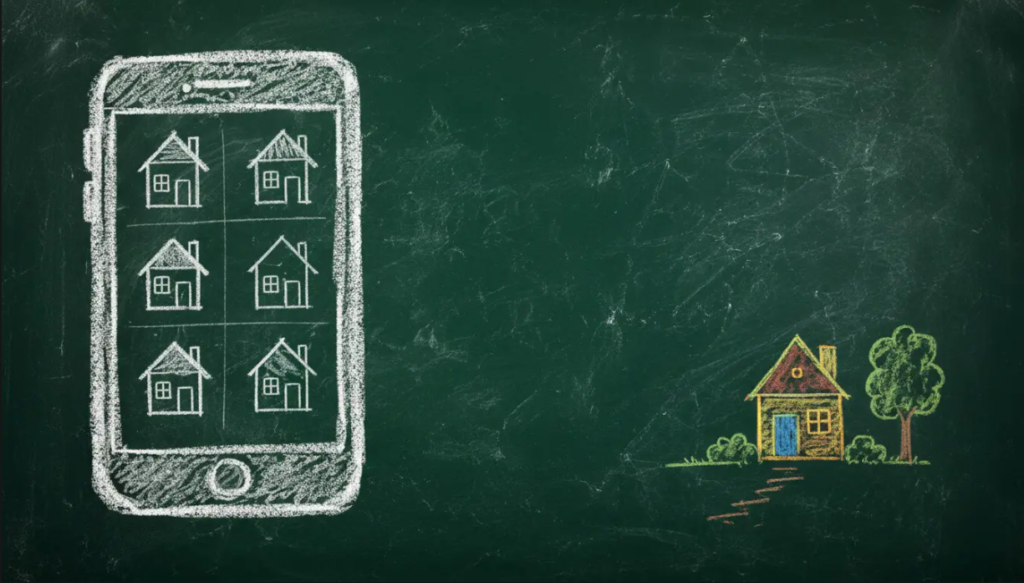
And I think that’s where the illusion exists. We have more access to real estate information than any generation of buyers before us, and somewhere along the way, I think we started believing that meant we could see the whole picture.
I know I did.
Now I realize the screen can show me the market without necessarily showing me the opportunity.
I still open Zillow.
I still go down rabbit holes looking at houses I have absolutely no intention of buying. I still check what someone paid for a property and what it might be worth today. I still use it because it makes finding information incredibly easy.
I just don’t look at that information the same way anymore.
Before I got into real estate, I thought seeing the market meant I understood the market. Now I realize Zillow can show me almost everything that’s for sale and still leave out some of the things that matter most when deciding what to actually do.
That’s the distinction I never understood before. Seeing everything isn’t the same as seeing the whole picture.
Zillow gives you access.
But access was never the same thing as control.
Next: The Commission Economy
Because once you understand the system you’re moving through, the next question is who gets paid when you move through it.