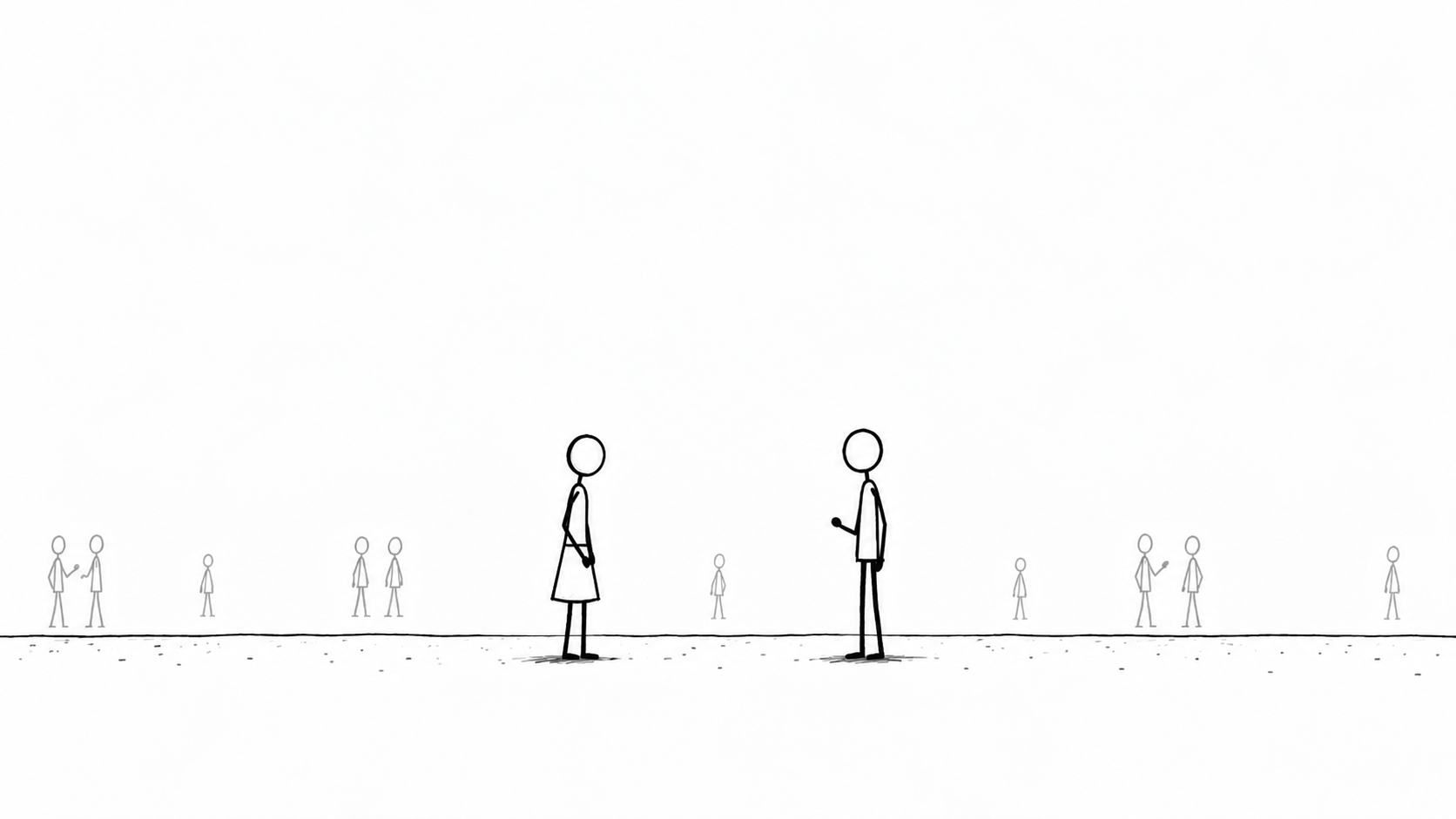


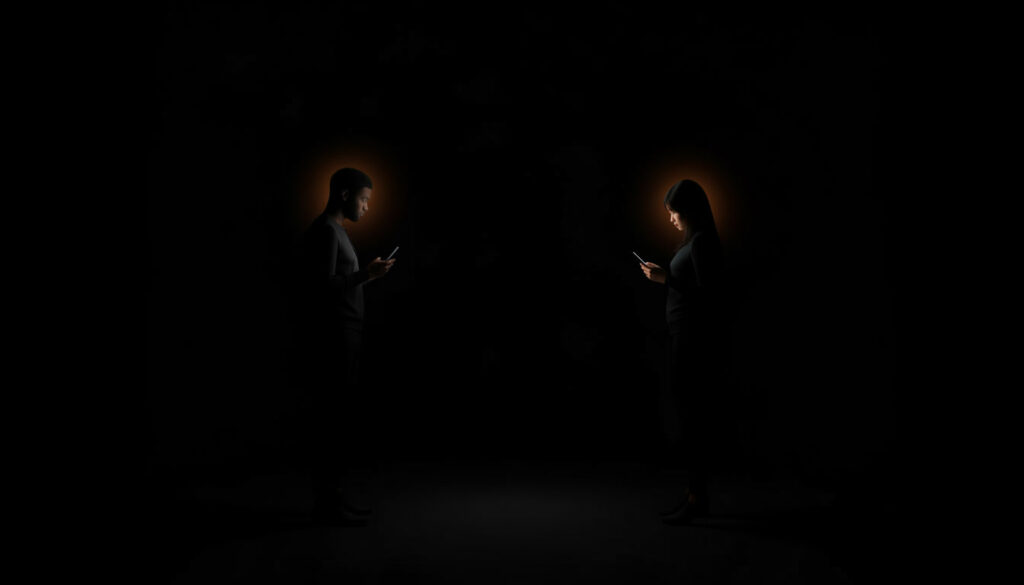
For years, I’ve heard people talk about the loneliness epidemic as if it appeared out of nowhere.
The more I thought about it, the less that explanation made sense.
Then I started looking back at what happened during and after COVID.
Whether intentional or not, COVID accelerated one of the largest social restructuring events in modern history. Offices closed. Schools closed. Churches closed. Community events disappeared. Families stopped gathering. Millions of people were suddenly separated from the routines and relationships that gave structure to everyday life.
Years ago, I wrote a book called Everybody Hides: How the Pandemic Unmasked Who We Really Are. At the time, I was focused on how people responded to fear, uncertainty, isolation, and pressure. Looking back, I think I missed something even bigger.
The pandemic didn’t just reveal individual behavior. It exposed how dependent modern society had become on systems that looked like community but often weren’t.
That’s an important distinction, because what happened after COVID wasn’t simply a health crisis. It became a social experiment that revealed how fragile many of our connections actually were.
Looking back, one of the biggest surprises wasn’t how people behaved during COVID. It was how many of those behaviors never fully reversed. We told ourselves we’d go back to normal when things reopened. In many ways, we never did.
I don’t remember people talking about loneliness this much when I was growing up. People talked about divorce. Money problems. Job loss. Addiction. But loneliness wasn’t a topic that seemed to dominate everyday life the way it does now. Somewhere along the way, being connected became easier while feeling connected became harder.
For the first time in modern history, staying apart became a social responsibility. What followed was one of the biggest social stress tests ever conducted. And the results were surprising. Because what Covid exposed wasn’t just loneliness.
It exposed how many of our connections were already fragile.
2020: The Separation
When lockdowns began in 2020, most people assumed the isolation would be temporary. A few weeks became a few months. A few months became years of changed habits, remote work, virtual meetings, food delivery, online entertainment, and digital communication replacing physical interaction.
At first, many of the changes felt like upgrades. We didn’t have to commute, sit in traffic, wait in lines, or fight crowds. Life became more efficient almost overnight.
I remember people talking about how much they loved working from home. Less stress. More flexibility. More freedom. What almost nobody talked about was what disappeared when you stopped seeing people every day without scheduling it first.
Some of the most important relationships in life aren’t scheduled. They’re accidental. They’re the conversations before a meeting starts, the person you run into after church, the parent standing next to you at a game, or the neighbor you bump into while walking the dog. When those interactions disappeared, most people didn’t notice immediately. Over time, they began to feel the absence without necessarily understanding its cause.
Convenience often comes with tradeoffs.
The more society moved online, the less people needed one another in person. The local coffee shop became an app. The neighborhood gathering became a Zoom call. The casual conversations that happen between meetings, at church, at school events, or while running errands slowly disappeared.
Looking back, I think a lot of us confused access with connection.
The weird thing is that I didn’t notice it immediately. Most people didn’t. The conveniences were obvious. The losses weren’t. It took years before I started noticing how many interactions had quietly disappeared from everyday life.
We had never been more reachable, yet many people had never felt more alone. The platforms were working exactly as designed. The question was whether they were replacing something they were never meant to replace.
People were connected. But many weren’t connected to people. They were connected to platforms.
That distinction would become important later.
2023: Loneliness Becomes a Public Health Crisis
In May 2023, U.S. Surgeon General Vivek Murthy released an advisory warning that loneliness and social isolation had become a public health epidemic.
The report compared the health impact of chronic loneliness to smoking multiple cigarettes a day. Think about that for a second. For years, loneliness was treated as a personal problem. Then, suddenly, it became an official societal problem.
The government wasn’t revealing something new. They were acknowledging something millions of people already felt.
I started hearing the word “lonely” from people I never expected to use it. Business owners. Parents. Professionals. People surrounded by other people. That’s when I realized this wasn’t just affecting people on the margins. Something broader was happening.
People had followers, friend lists, group chats, and endless ways to communicate. Yet many still felt disconnected.
One of the observations I’ve made over the last several years is that the loneliest people I know are often the most connected digitally.
They’re constantly online. Constantly reachable. Constantly engaged. Yet somehow still alone.
That’s when I started wondering whether we had confused communication with connection.
Looking back, social media solved a problem nobody really had. Most people already knew how to stay in touch with the people they cared about. What social media offered was the ability to stay connected to everyone else. The question is whether that tradeoff quietly weakened the relationships that mattered most.
Social media promised connection. What it perfected was access.
Those are not the same thing.
2024: AI Companions Reveal the Demand
In 2024, another story emerged that received less attention than it probably deserved.
AI companion platforms like Replika and Character.AI continued growing rapidly as millions of users spent hours talking to digital personalities.
The first question most people asked was, “How does someone become emotionally attached to software?”
I think that’s the wrong question.
The better question is why millions of people were willing to spend hours talking to software in the first place.
Then the Character.AI lawsuit made national headlines. The allegations centered around a teenage user who had developed an emotional attachment to an AI companion.
The details of the case sparked debate. But what interested me wasn’t the lawsuit itself. It was what the lawsuit revealed.
When I read the story, I wasn’t thinking about AI. I was thinking about demand. If people are willing to build relationships with digital personalities, what does that say about the relationships available to them in the real world?
People weren’t using these platforms because they needed information. They were using them because they needed connection. That realization bothered me more than the technology itself.
For decades, businesses tried to sell products.
Now, some of the fastest-growing platforms were selling interaction itself.
2025: Connection Becomes a Subscription
By 2025, the trend became impossible to ignore.
Dating apps had already transformed how millions of people searched for relationships. Tinder, Bumble, and Hinge generated billions in revenue while many users openly described feeling exhausted by the experience.
The promise was connection, but for many users, the reality felt more like endless searching. People kept swiping, matching, messaging, and returning, yet many described feeling just as frustrated and disconnected as when they started.
At the same time, platforms like OnlyFans continued growing into billion-dollar businesses built around direct access, attention, and intimacy. Not necessarily physical intimacy, either. In many cases, what people seemed to be paying for was emotional intimacy, and that distinction matters because it reveals what many customers were actually seeking.
Many subscribers weren’t paying for content alone. They were paying for recognition, conversation, and the feeling that somebody on the other side of the screen actually knew they existed.
Meanwhile, AI girlfriend and AI companion startups attracted millions of users and millions in investment capital.
As I looked across these industries, the pattern became difficult to ignore. Social media monetized attention. Dating apps monetized searching. OnlyFans monetized intimacy. AI companions monetized conversation.
Different products. Same underlying demand.
That’s when the bigger realization hit me. The market didn’t create loneliness. It figured out how to monetize it.
And once I saw that pattern, I couldn’t stop seeing it. Every platform seemed to be solving the same problem from a different angle.
That’s not necessarily a criticism. Markets respond to demand. The uncomfortable part is realizing how much demand exists. Entire industries don’t emerge because a few people are lonely.
They emerge because millions are.
2026: The Loneliness Economy
By 2026, it was difficult to ignore what had emerged.
An entire ecosystem now exists around helping people manage loneliness without necessarily solving it. Social media companies benefited from engagement. Dating apps benefited from continued searching. AI companions benefited from continued conversations, while creators benefited from parasocial relationships that made audiences feel connected to someone they would never actually meet.
Again, this isn’t an accusation. It’s an observation.
The system doesn’t necessarily profit when loneliness disappears.
It profits when engagement continues.
That doesn’t mean these companies created loneliness. In many cases, they simply recognized it earlier than everyone else.
The market saw a growing emotional need and responded, because that’s what markets do.
The uncomfortable question is what happens when some of society’s fastest-growing industries become dependent on the continuation of that need.
Maybe that’s why this topic bothers me more than most. I don’t think we’re talking about a technology problem. I think we’re watching a community problem get outsourced to technology.
We didn’t replace community with technology. We replaced community with subscriptions.
And the more I thought about it, the more I realized people weren’t looking for more technology at all. They were looking for what technology replaced.
Think about how strange that sentence would have sounded twenty years ago. If someone had told you that people would eventually pay monthly fees for companionship, emotional support, attention, dating opportunities, community access, and conversation, it would have sounded absurd.
Today, it’s normal.
What This Reveals
Most discussions about loneliness focus on individuals. People need to get outside more. People need better relationships. People need stronger communities. All of those things may be true. But they miss a larger question.
What happens when an entire economy forms around replacing the very things communities used to provide: friendship, belonging, recognition, conversation, and connection?
Historically, those things came from families, neighborhoods, churches, schools, civic organizations, and local communities.
Today, many increasingly come from platforms. The more I thought about it, the more I realized many people weren’t paying for content at all. They were paying for proximity. Proximity to a creator. Proximity to a potential partner. Proximity to a community. Proximity to another human being.
Seen through that lens, many modern business models start to look surprisingly similar. For most of human history, belonging was something you inherited. Today, it’s increasingly something you purchase.
That shift may end up being one of the most important social changes of the modern era.
Closing
The loneliness economy wasn’t created during COVID. COVID exposed it.
The lockdowns revealed how many people were already disconnected long before the world shut down, and what followed wasn’t the creation of a new problem so much as the rapid growth of businesses designed to serve an existing one.
That may be the quiet truth hiding underneath the entire conversation. The more technology promised to connect us, the more valuable loneliness became, because once connection becomes a product, loneliness becomes a market.
The businesses didn’t create the loneliness. But once loneliness became profitable, nobody had much incentive to solve it completely.
And that’s the question I keep coming back to.
We spend a lot of time asking why people are lonely, but not nearly enough time asking what happens when loneliness becomes one of the world’s most profitable business models.