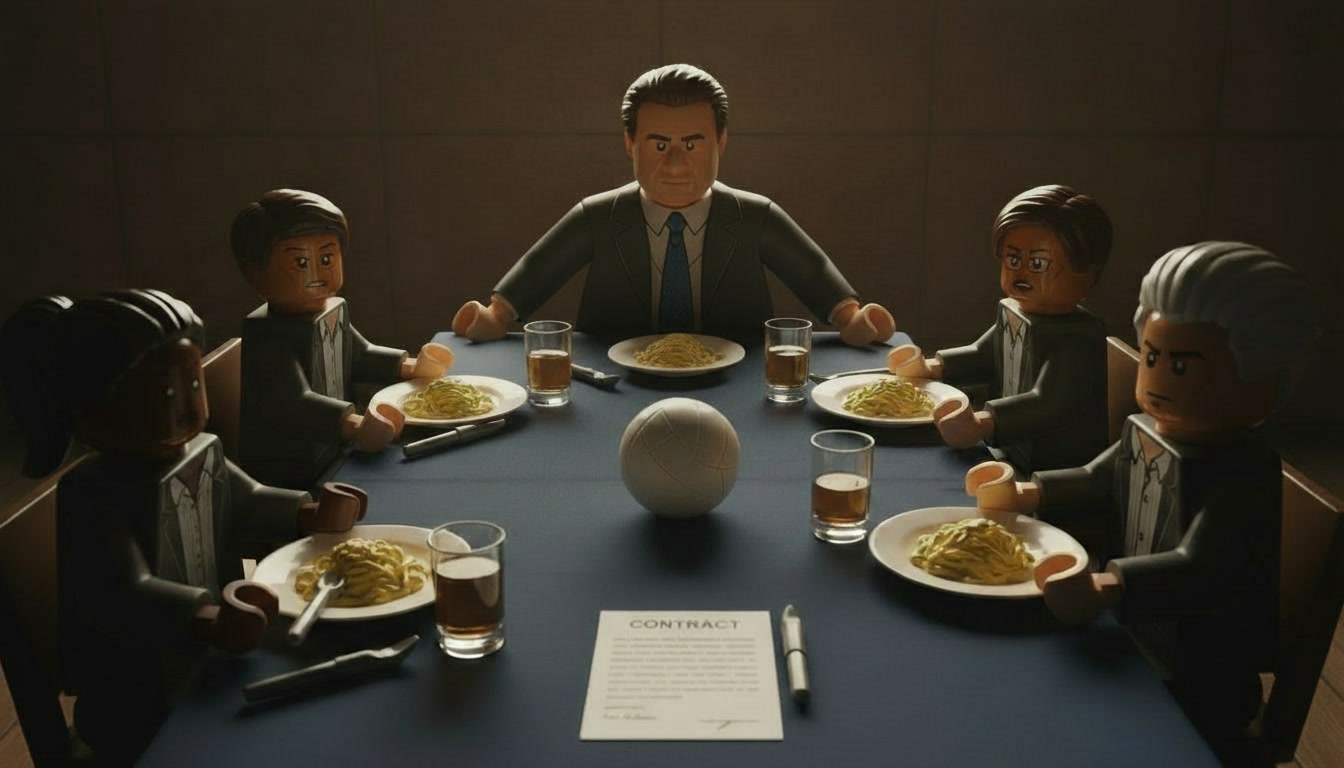



Marcus arrived a little late when he met Sofi at the restaurant.
The parking lot was mostly empty, which was unusual for that side of town at that hour, and before he even sat down, he had already started looking around. The place had only been open a few months. The sign out front hung slightly crooked, the menus were printed on what seemed like loose-leaf paper, and the waitress seemed to be covering half the dining room by herself.
“Why are you late?” Sofi asked.
“Trying to get the dropshipping business off the ground,” Marcus said as he slid into the booth.
He glanced around the room.
“This place isn’t gonna make it.”
Sofi laughed.
“You’ve been here three minutes.”
“Three minutes is enough.”
Marcus had never let a lack of information interfere with a strong opinion.
As lunch went on, he continued building his case. The location wasn’t ideal. The menu had too many items. The owner was spending too much time talking to customers. The parking lot wasn’t big enough. Every observation somehow led back to the same conclusion.
According to Marcus, the restaurant was doomed.
What’s interesting is that Marcus never owned a restaurant.
The longer the lunch went on, the more impressive it became. If the waitress smiled too much, that was a problem. If she didn’t smile enough, that was a problem too. The menu was too big until Marcus found something he liked. Then the menu was confusing. The owner was too involved until he disappeared into the kitchen. Then he wasn’t involved enough. Every new piece of information somehow supported the exact same conclusion. By the time lunch was over, Marcus had convinced himself that he knew exactly how the story would end.
As they walked toward the parking lot, Sofi laughed.
“You know what’s funny?”
“What?”
“You’ve spent an hour explaining why this place won’t make it and haven’t said one thing about the food.”
Six weeks later, he called Sofi.
“Got a minute?” he asked.
Sofi already knew that tone.
People never call with that tone when things are going great.
“What happened?”
Marcus sighed.
“I think my new business might’ve been a mistake.”
That got her attention.
Just a month earlier, Marcus had been talking about growth, future hires, and all the things he planned to do once the business took off. Now he sounded like somebody preparing a eulogy.
As Marcus explained it, the previous month had been slower than expected. A few sales didn’t come through. Website traffic was down. A supplier was running behind schedule. Nothing sounded catastrophic, but Marcus wasn’t describing events anymore.
The more Marcus talked, the more familiar it sounded. The market wasn’t there. The timing wasn’t right. Nobody wanted what he was selling. He should’ve stayed at his old job.
Six weeks earlier, he had been explaining why a restaurant was failing.
Now he was doing the same thing to himself.
Sofi listened for a few minutes before finally interrupting him.
“How’s that restaurant doing?”
Marcus laughed, not because it was funny but because he knew exactly where she was going.
“What restaurant?”
“The one that wasn’t gonna make it.”
Marcus shook his head.
“You’re really doing this right now?”
“Absolutely.”
“You walked into that restaurant, saw a few things you didn’t like, and immediately decided you knew how the story ended. Now you’ve got one slow month, and you’re doing the exact same thing to yourself.”
“It feels different.”
“Of course it does. This time it’s your business.”
Marcus sat quietly for a second.
Six weeks earlier, he had walked into a restaurant, noticed a few things he didn’t like, and decided the owner was in trouble. Now he was doing the same thing with his own business.
The more he thought about it, the harder it became to ignore. The restaurant wasn’t failing, and neither was his business. In both cases, he had taken a temporary situation and promoted it to a permanent conclusion. The only thing that had actually changed was the story he was telling himself.
Marcus isn’t unusual.
Most of us have done some version of the same thing.
Give us a slow month, a bad race, a rough quarter, or a difficult season, and before long we’re talking like we already know how the story ends.
That’s why most people don’t get taken out by collapse; they get taken out by the belief that a dip is a collapse.
It usually isn’t.
A few months later, Sofi suggested they meet for lunch again.
When Marcus pulled into the parking lot, he started laughing.
The place was packed.
Cars filled every available space. People were waiting near the entrance. The owner seemed to be doing just fine.
As they walked toward the door, Sofi smiled.
“I thought this place was doomed.”
Marcus dropped his head.
“I knew you were gonna bring that up.”
Of course she was.
Because the restaurant was never the story.
Marcus was.
About the Author
Brian B. Turner is an entrepreneur, author, and creator of the DON’T FOLD series. His work explores discipline, resilience, faith, business, relationships, and the decisions people make when life gets volatile.
Brian is the author of Don’t Fold: Mental Discipline for Volatile Seasons.
Get the book:
https://amzn.to/3Q2ihjb